
PAKISTAN: Policy & Trade Dynamics
Tariff Relief Talks Gain Momentum in Islamabad
Discussions between the Government of Pakistan and textile export stakeholders on securing preferential access or tariff relief for the U.S. market intensified this month. Industry associations including APTMA (All Pakistan Textile Mills Association) and PTEA (Pakistan Textile Exporters Association) reported multiple high-level meetings with commerce ministry officials, focusing on strategies to reduce the 19% reciprocal tariff currently applied to Pakistani exports entering the U.S. Talks are ongoing, with a policy position expected to firm up in Q2-2026.
Exporters Warn of Continued Tariff Uncertainty
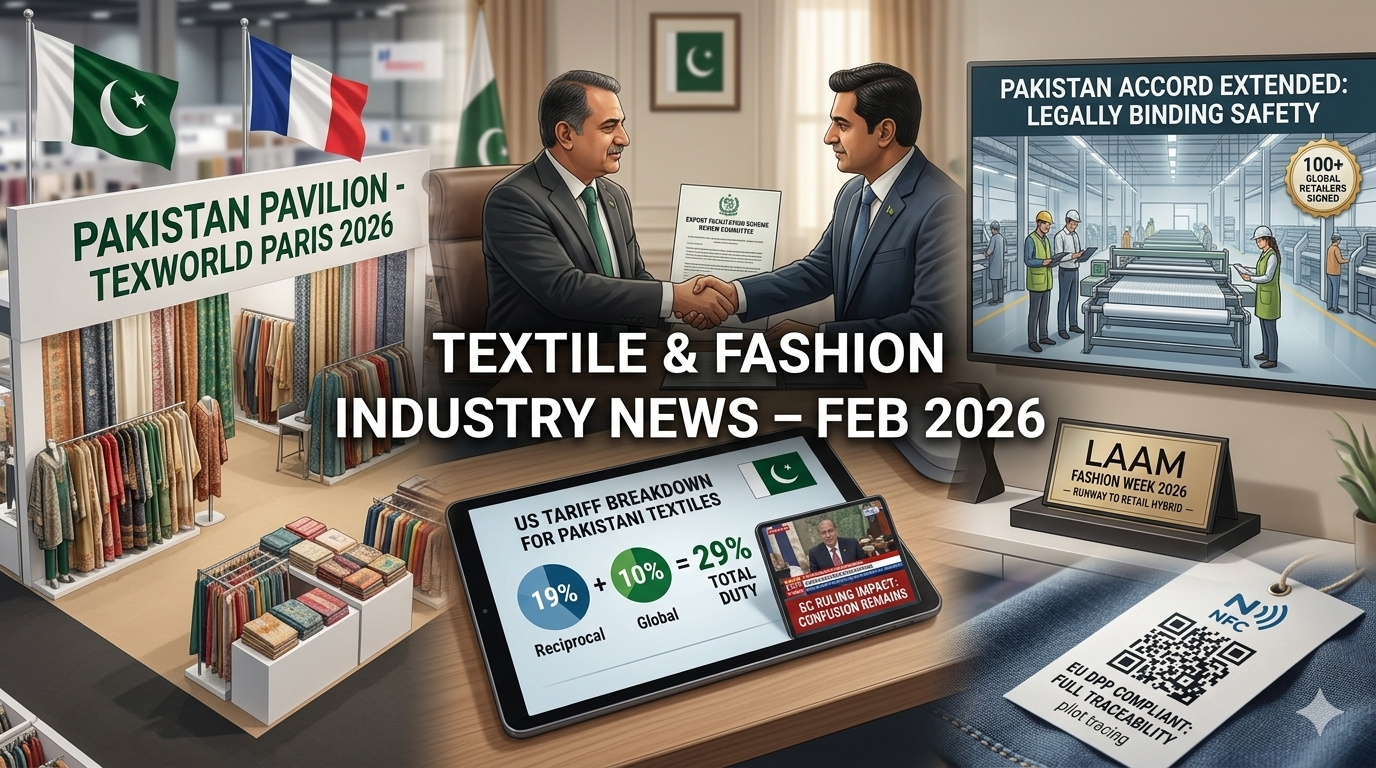
Industry sources told local media that frequent shifts in U.S. tariff policy are creating confusion for exporters. After a U.S. Supreme Court ruling on February 20th struck down part of Trump era tariffs, the administration moved to apply a 10% global tariff under a different legal framework. Previously, Pakistan faced an effective 29% duty (19% reciprocal + 10%).
Exporters warn that this flip flopping undermines confidence in new orders, even though existing contracts remain in place. Exporters also underscored that Pakistan’s sector is under pressure from high domestic costs such as taxation and financing, which compound tariff burdens and affect competitiveness and new order flows.
Government Consultations & Export Facilitation
High Level Dialogues on Export Competitiveness and Facilitation
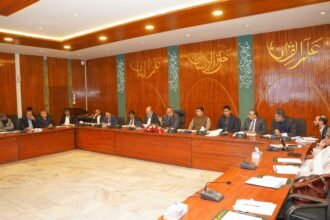
Federal Minister for Commerce Jam Kamal Khan engaged industry leaders on February 27 in a consultative session aimed at strengthening global competitiveness and accelerating export growth for value added textile and apparel sectors. The focus was on addressing structural constraints, boosting value chains and supporting exporters in tackling international demand pressures.
Following up on these discussions, on February 28 the government formally constituted a technical committee to review and resolve key issues under the Export Facilitation Scheme, particularly the limited utilization period that exporters argue is restricting operational flexibility, a crucial matter for the textile and apparel sector’s working capital.
Performance Indicators & Recognition
Textile Export Performance: Early 2026 Signals
Though full Q1 official data is still pending, private export monitoring groups reported strong demand in knitwear, ready-made garments, and home textiles for February, particularly to European and Middle Eastern buyers. Knitwear continues to outperform woven categories, mirroring long term global trends where casual, comfort driven apparel remains dominant.
February 26: Textile Exports Edge Up in January
According to data released at the end of February, Pakistan’s textile and clothing exports showed a 3.14% year-on-year increase in January 2026, reaching about $1.74 billion.
- Bedwear: +6.88%
- Towels: +14.09%
- Readymade Garments: +9.64% These value-added categories helped sustain the performance amid a mixed overall outlook.
Prime Minister Announces Power Tariff Cuts for Industry
In one of the most significant announcements of the quarter, Prime Minister Shehbaz Sharif confirmed a reduction of industrial electricity tariffs by PKR 4 per unit and lowered wheeling charges in a recent cabinet meeting. This move is poised to ease one of the biggest cost burdens on textile mills and garment exporters.
Top 30 Exporters Honored at PM House
Pakistan’s most successful exporters of FY2024-25 were recognized in a ceremony at the Prime Minister’s House in Islamabad, where most of the top 30 performing firms hailed from the textile and apparel sector. The awards highlighted sustained export performance amid global headwinds.
Compliance, Global Presence & Fashion Events
Pakistan Accord Extended for Factory Safety
Through the first quarter of 2026, it was confirmed that more than 100 global retailers have signed onto the renewed Pakistan Accord, a legally binding factory safety program for garment workers. This extension, active since January 1, 2026, means continued independent inspections, remediation efforts and worker safety programs across sourcing facilities in Pakistan.
Pakistan Pavilion Recognized at Texworld Paris 2026
At Texworld Paris, a major global sourcing event held February 2–4 in Paris Le Bourget, the Asian textile hubs stood out with Pakistan present among the international exhibitors, reflecting ongoing participation in key global platforms even as competition intensifies.
LAAM Fashion Week 2026 Sets a New Benchmark
LAAM Fashion Week, Pakistan’s runway to retail hybrid showcase, unfolded at the start of the month, spotlighting both commercial fashion and avant garde design.
- Showcased Brands: Agha Noor, Panache Apparel, Urge Pret, KIBO, Golmohar.
- Designer Collections: Sadaf Fawad Khan, Fahad Hussayn, Nomi Ansari, and others. The event brought creative energy and commercial prospects under one roof, with collections made available for purchase immediately through digital platforms.
INTERNATIONAL CONTEXT
Regional U.S. Tariff Landscape
The U.S. has been adjusting tariffs under its reciprocal tariff framework:
- Bangladesh: Tariff cut to 19% with zero duty on RMG made with U.S.-origin cotton or synthetics.
- India: Secured a reduced tariff of about 18% under a recent interim trade agreement.
- Vietnam & Cambodia: Operating at around 20% reciprocal tariffs.
EU Textile Restrictions Update
European policymakers reaffirmed plans to expand carbon and sustainability compliance requirements for imported textiles, with pilot tracing systems set to become mandatory documentation components by late 2027. This reinforces the importance of traceability, digital product passports and supply chain transparency.
Global Cotton Market Fluctuations
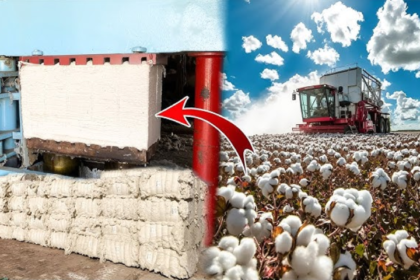
World cotton prices remain volatile due to climate pressures and shifting acreage patterns. Supply tightness in major producing regions (U.S., India, Brazil) has kept prices relatively elevated. For textile producers worldwide, this ups the ante on efficiency, fiber blending strategies and value capture through downstream processing.