
The Used & Preloved Economy of Pakistan: Class, Discards, and the Textile Paradox
Pakistan presents a striking industrial contradiction: a top ten global exporter of brand-new apparel that simultaneously ranks as one of the world’s largest importers of secondhand clothing. From Karachi’s bustling Lunda Bazaars to high-end digital thrift boutiques, the pre-owned garment economy exposes deep socioeconomic shifts.
Executive Summary & Key Metrics
- The Industrial Paradox: Pakistan manufactures premium apparel for Western brands while importing over 1 million tonnes of discarded global clothing annually.
- Surging Import Volumes: Secondhand clothing imports jumped 90% in a single fiscal year, exceeding $309 million as national poverty rates pushed toward ~45%.
- Double Arbitrage Trade: Importers sort incoming global bales, retailing lower-grade items domestically while re-exporting premium vintage items to Afghanistan, India, and Turkey.
- Class Divergence: What is an economy of survival in Lyari and Sher Shah has been rebranded as “curated circular fashion” for DHA and Clifton elites.
Manufacturing for Western Wardrobes, Wearing Western Discards
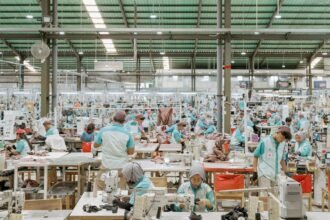
Pakistan’s textile ecosystem operates on a fascinating contradiction. On one side, state-of-the-art spinning, weaving, and stitching facilities produce billions of dollars in finished apparel for major global retail chains. On the other side, the country stands among the top two or three importers of secondhand apparel on planet Earth.
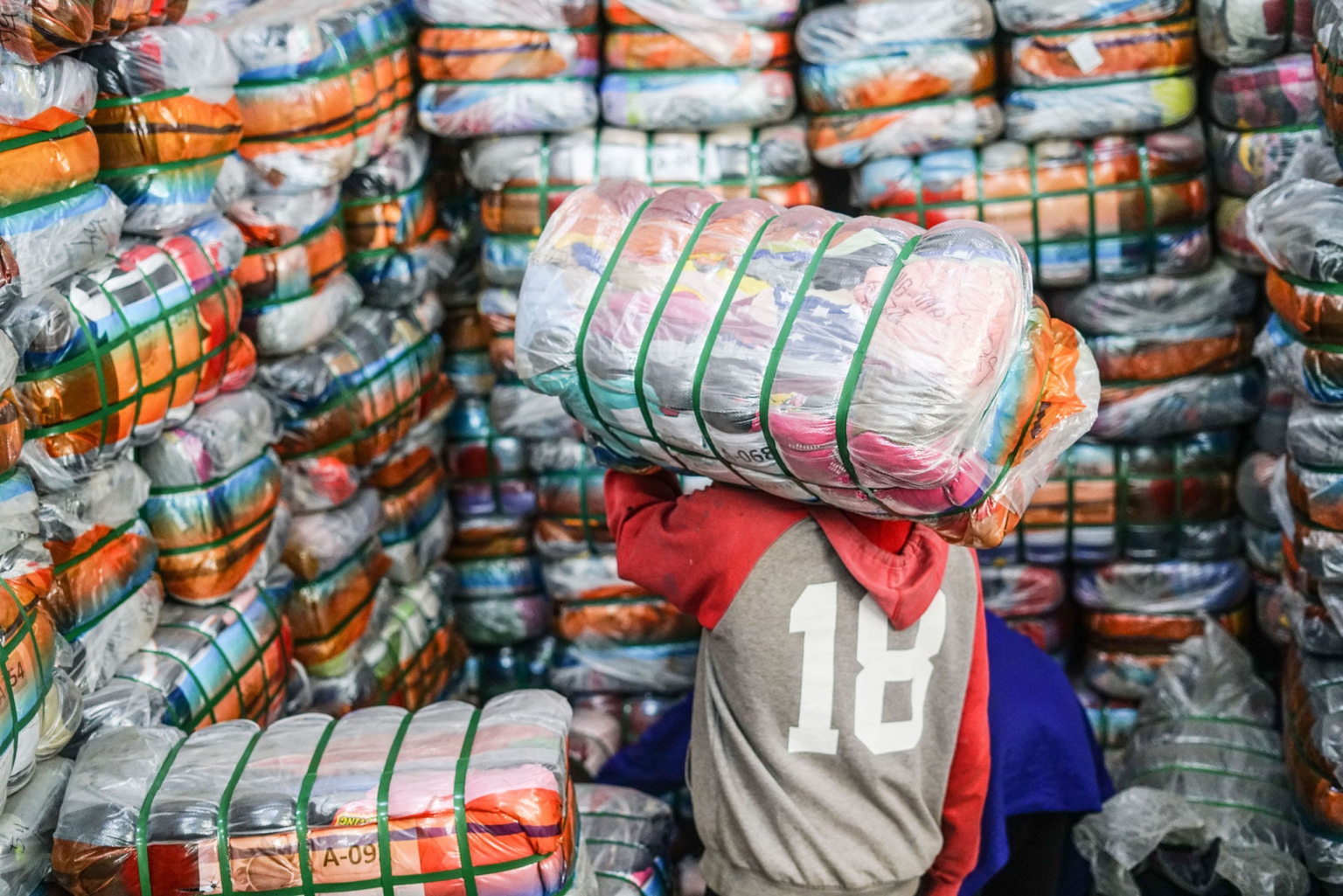
Every year, over a million tonnes of cast-off garments—charitable donations and excess stock from the US, UK, Australia, Japan, and South Korea—arrive at Karachi ports in tightly compressed bales. Sorted in warehouse hubs across Lyari and Sher Shah, these clothes fuel a multi-hundred-million-dollar domestic retail web.
“We manufacture high-quality apparel for European and American wardrobes while a massive proportion of our own citizens dress in what those exact same wardrobes have already discarded. This isn’t circular fashion working as Western advocates imagine—it’s a purchasing power vacuum filled by imported cast-offs.”
Inflation, Poverty, and the Double Arbitrage Trade
With World Bank revised poverty estimates climbing toward 45% in Pakistan, secondhand markets have transitioned from an option for budget hunters into a vital survival mechanism for the squeezed middle class. According to the Pakistan Second Hand Clothing Merchants Association, used clothing imports surged 90% in a single fiscal year to surpass $309 million.
Beyond domestic survival, Pakistani traders have built a sophisticated double arbitrage network:
- Bulk Import & Sorting: Unsorted global clothing bales are purchased by weight at discount international rates.
- Domestic Retail: Utility-grade garments are distributed to Sunday bazaars and street stalls across the country at accessible price points.
- Regional Re-Export: High-grade, branded vintage items are filtered out and re-exported to buyers in Afghanistan, India, and Turkey—monetizing global discarded fashion twice.
From Necessity to Aesthetic: The Digital Rebranding of Used Goods
Over the past decade, the secondhand product journey has bifurcated along sharp class lines. The same product—someone else’s pre-owned garment—is parsed through two radically different consumer experiences:
| Market Segment | Traditional Lunda Bazaar | Digital “Preloved” Boutiques |
|---|---|---|
| Target Audience | Low-income households, shrinking middle class | Affluent Gen-Z, urban professionals, DHA/Clifton demographics |
| Platform Examples | Saddar flea markets, Sunday Bazaars, local stalls | Khazanay, Secret Stash, Mega Thrift Store |
| Branding Language | Secondhand, cheap, utility, bulk | Preloved, vintage, curated, sustainable, circular |
| Product Spectrum | Unsorted winter coats, everyday wear, basic footwear | Factory leftovers, Nike/Jordan sneakers, Chanel, Gucci, Louis Vuitton |
Platforms like Khazanay (launched in 2015) have structured sneaker thrifting into a polished e-commerce experience. Meanwhile, luxury marketplaces like Secret Stash (founded in 2014) created an anonymous consignment portal for pre-owned high fashion, deliberately removing social stigma and reframing resale as mindful, sophisticated taste.
Strategic Imperatives for Pakistan’s Textile Manufacturers
As thrifting shifts from an economic embarrassment to an ethical Gen-Z fashion statement, local export manufacturers and domestic brand leaders can no longer ignore the secondhand ecosystem. The textile industry must take a proactive strategic stance:
- Recycled Fiber Integration: Leverage domestic textile waste and unsellable clothing imports to produce recycled yarn blends, reducing reliance on expensive virgin raw cotton.
- Formal Take-Back & Resale Programs: Domestic ready-to-wear brands should introduce structured trade-in schemes, building formal domestic circularity rather than surrendering the entire market to informal importers.
- Durability-Driven Marketing: Communicate product lifespan and repairability transparently to compete against imported fast-fashion throwaways.
Conclusion: Confronting Class Stigma and Market Gaps
Ultimately, whether an item is bought for Rs 300 at a Karachi street stall or purchased for Rs 50,000 via a curated online boutique, both transactions reflect identical economic behavior wrapped in different social branding. The disparity in how society views them reveals more about class prejudice than it does about fashion.
Instead of romanticizing luxury thrifting or disparaging street bazaars, Pakistan’s textile policymakers must address the root cause: building a domestic manufacturing and pricing model that allows every citizen to afford quality, locally produced apparel.
Published for Farm Fabric Fashion | Industrial Economics & Consumer Trends Watch