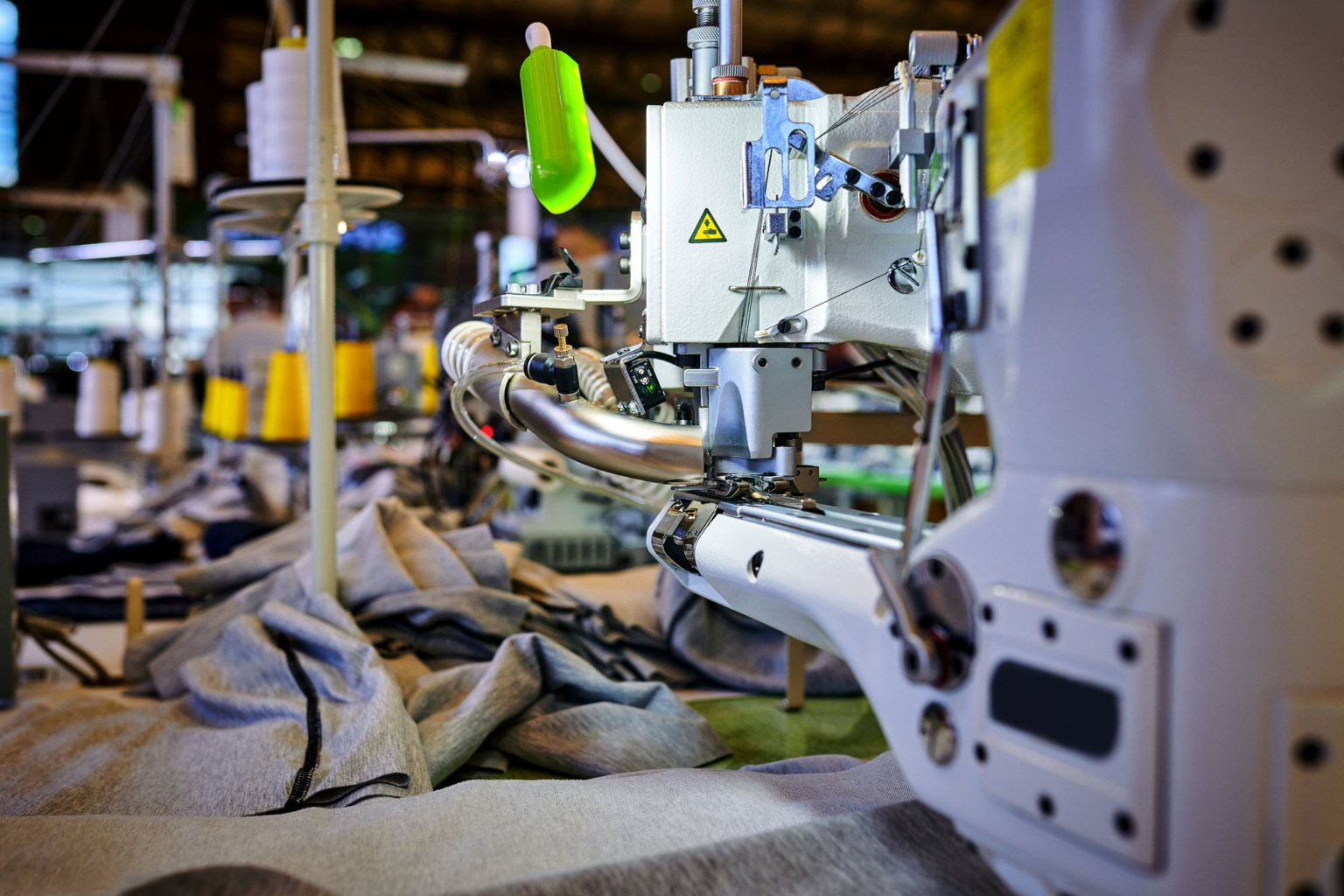

The Degree That Taught Her Everything But the Floor
Pakistan’s textile universities produce brilliant graduates with top grades, yet years of industry-academia disconnect leave four-year degree holders struggling with basic industrial manufacturing. It is time to replace endless talk-shop seminars with structural, mandatory floor training.
Core Insights & Recommendations
- The Competence Gap: Experience currently beats education—stitching operators often understand production lines better than four-year degree holders.
- Flawed Internships: Traditional internships at mega-mills treat students as passive spectators rather than active participants.
- SME Integration: Universities must sign mandatory MoUs with Small & Medium Enterprises (SMEs) where real, un-automated problem-solving happens.
- Unifying Technical Institutes: PRGTTI and PHMA-IKTK must be structurally integrated with university curricula rather than operated as isolated parallel tracks.
A Brilliant Mind Without Floor-Ready Skills
The debate surrounding the gap between Pakistan’s textile industry and academia has dragged on for decades. We call it out at every conference and panel discussion, yet real-time solutions remain glaringly absent.
A few months ago, a young graduate from one of Pakistan’s most prestigious textile universities visited our unit for thesis assistance. On paper, she was an ideal candidate: high grades, a specialized major in industrial garment manufacturing, and an esteemed institutional degree. She was genuinely brilliant.
Yet, over a few days, a troubling reality emerged. She lacked foundational knowledge of industrial production lines, could not build a basic garment costing sheet, and had no practical grasp of everyday factory processes.
“This is not a reflection of her personal abilities. Both her university and our industry have failed her miserably. We fail thousands of textile graduates every year by issuing credentials without opening our factory doors to provide true competence.”
When Experience Beats Education
In Pakistan’s garment sector today, practical experience beats formal education at virtually every level. A stitching operator who joined the shop floor at sixteen and worked up to line supervisor understands the nuances of line balancing and efficiency far better than a fresh four-year degree holder. This is the inevitable outcome of building academic programs without a pipeline to actual production environments.
While larger textile mills do offer corporate internship programs, students report being treated as mere sideline spectators. Preoccupied supervisors rarely have the bandwidth to mentor them, turning these placements into superficial exercises that yield no hands-on technical skill.
SMEs: The Real Classrooms for Industrial Action
Fixing this requires structural enforcement rather than another industry seminar. The solution lies in mandatory partnerships between textile degree programs and Small & Medium Enterprises (SMEs) and mid-sized factories.
Why SME Internships Outperform Corporate Mega-Mills:
Under mandatory academic MoUs, students should complete a structured six-week immersive floor rotation. They must physically sit at the cutting table, sit through buyer compliance audits, and build and revise live costing sheets when buyers push back on price margins.
Realigning Existing Training Infrastructure
Pakistan does not need to build new institutions; it needs to connect the ones that already exist. Key technical bodies include:
- PRGTTI (Pakistan Readymade Garments Technical Training Institute): Established by PRGMEA and the Ministry of Textile Industry, having trained ~15,000 workers for value-added garment roles.
- PHMA-IKTK (Institute of Knitwear Technology Karachi): Operating since 2002 under the Pakistan Hosiery Manufacturers & Exporters Association to bridge technician shortages.
While these bodies have successfully trained thousands of mid-level technicians and operators, they operate in isolation from four-year university programs. Academic deans and technical institute principals rarely sit in the same room to align university curricula with practical floor requirements. Giving these institutes a formal mandate and funding to act as university-to-factory bridges would immediately scale workforce readiness.
The Road Ahead: Institutional Accountability
Trade associations such as FPCCI, PRGMEA, and PHMA must move beyond hosting ceremonial events and use their network power to standardize, enforce, and audit student placement pipelines across member factories.
“Our textile graduates deserve far better than a degree that teaches them everything except the one thing they actually need: floor readiness. It is time for factory owners, trade bodies, and universities to build an integrated talent pipeline that turns academic theory into industrial execution.”
Published for Farm Fabric Fashion | Industrial Human Capital & Policy