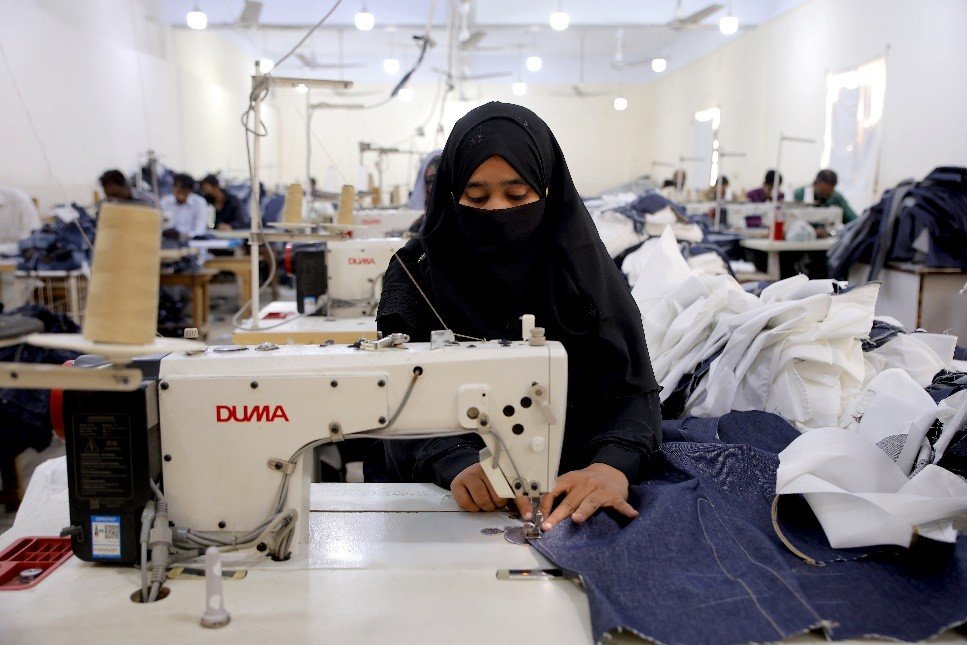

Last week, as I stood inside my factory’s main floor, my heart burst with pride. We had just deployed a Grievance Management System, something that might not be a big deal for large factories but for someone our size, with less than 100 employees, this was unprecedented. Part of my feelings also reflect how long we’ve come as an industry, the efforts we have collectively put to bring Pakistan to the limelight, especially when the world demanded responsibility and transparency. And to be honest, the walls of my factory now feel transparent… in a good way!
For years, Pakistan produced billions of dollars’ worth of garments for the world, yet, we remained invisible. Our workers worked silently in the background, without a second glance from the brands they produced for. No one knew who made their clothes, how they were dyed, what conditions the workers lived in or how the factories managed their impact. And sadly, the world didn’t care.
Until they did.It started with major tragedies like the Rana Plaza incident and the Ali Garments fire. Investigations were conducted. People and consumers raised questions. And suddenly what happened behind the scenes came on stage.
Who made the clothes? Where and under what conditions? Safety and health issues were highlighted. And then the environmental impact.
The supply chain was suddenly questioned. Governments were forced to write laws. The EU Due Diligence Act, the German Supply Chain Act, the UK Modern Slavery Act, amongst many others, forced brands and buyers to track their product journey. The brands panicked but then adapted. Suddenly every factory thousands of miles away had to trace every fiber, record every process and prove every claim.
For most western countries, this shift felt natural. But for Pakistan, we had to learn everything from scratch.
It was 2016 / 2017, when we, as an industry, first started hearing of these laws. A few Pakistani manufacturers, the large conglomerates willingly embraced the transformation. They were all tired of the constant questions, tired of being labelled as unsafe, risky or unreliable. They themselves wanted to open their doors to the world, where everyone could see their truth. They published sustainability reports, even before anyone asked. They documented their worker welfare and calculated their environmental impact, upgrading their processes where needed. The ROI back then was slow but Pakistani manufacturers wanted to go all in.
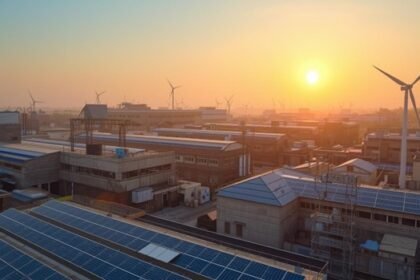
However, for Pakistani SMEs this change was gradual. Most of us didn’t have the knowledge or resources to show the world our processes. Even when we did what most Due Diligence Acts required, we could not document them or produce sustainability reports. But the change is there and it is very much happening. You can feel it when you walk through the industrial units in Karachi, Lahore or Faisalabad. Most factories use alternate energy / green energy to power their facilities, carbon footprints are discussed as an everyday issue, traceability is in every conversation, women are not only a part of the labor force but are now rising in leadership roles and organizations like Fruit of Sustainability are helping the industry set up proper Grievance Management Systems, so the employees can raise concerns without fear.
Transparency stopped being a burden. It became our identity. Or as I personally like to call it, it has become our industry’s lifestyle.
For years, we, the SMEs were worried of opening our doors for fear that our weaknesses would be highlighted. But something profound took place. Instead of pulling away, the buyers supported us. They leaned closer. And organizations like the German Importers Association helped translate our good practices into collaborative programs, sustainability support and structured guidance. Suddenly the Pakistani industry became more attractive simply because we were honest, we were not afraid to show our weaknesses and we were not shy of changing our direction for the better. We are visibly trying and when our country grapples with its realities and still chooses to open its doors, the world respects that courage.
But of course, transparency is a journey and not a switch. There is so much that still needs to be done. We need a proper system which ensures that each factory documents their social and environmental footprints, we need grievance systems in every production unit, we need more balanced gender participation, we need government backed frameworks, nationwide databases and industry wide collaboration. And all this should be consistent, not just occasional brilliance.
But the most important thing that we need is belief… in our capacity to redefine what responsible manufacturing looks like. Belief that transparency is our strength and not our weakness and that openness will attract the world and not push it away.
Transparency is the global language of trust and Pakistan, perhaps unexpectedly, is learning to speak it fluently. The shift hasn’t been loud, but it is steady, genuine and shaping a new story for the nation’s manufacturing sector. A story where Pakistan is not just a producer but a responsible, visible and accountable partner in the global supply chain.