
For years, the fashion world was mapped out only in the West, centered in Paris, Milan, New York and London. The rest of the world stayed in the background, especially South Asia, acting as their manufacturers, the workers part of the supply chain.
But there has been a quiet revolution that has taken place and lately, South Asian countries like Pakistan are disrupting and reshaping the world of fashion from the inside out. We have begun to be the designers instead of being just backend producers for other brands and design houses. This completely changes the Western style of fashion and makes it more culturally specific.
Today, Pakistan is no longer just the world’s workroom but it has evolved into being a powerhouse of fashion, sustainability and culture. Larger cities like Karachi and Lahore serve as design districts and then smaller cities and towns, including our rural areas are abundant with textile talent, including handloom weaving (khaddi), distinct hand embroideries, natural dye printing and even handmade jewelry. For the first time, our creativity is taking center stage in the world of fashion.
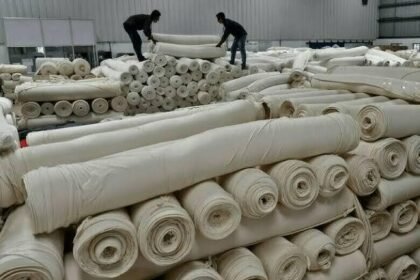
On an industrial level, Pakistan, being one of the top 5 denim producers worldwide, does so sustainably, by using solar power, recycled water and chemical-free finishing. Clean and green production exists as a necessity, not a trend.
Sustainability is seen in cities like Karachi, Lahore Faisalabad and beyond, where factories run on renewable energy and have fair labor practices. Many garment manufacturers in the country, such as Artistic Milliners, Garment Resources and Soorty Enterprises, show how being environmentally friendly can boost industrial growth. Chottani Denim Industries in Karachi, who are also part of the Pakistan Accord, have gone as far as producing jeans for luxury brands like Versace Jeans Couture.
In the design sector, Pakistani creators are bringing in new ideas and changing the fashion narrative completely. Khaadi, a brand that celebrates local artisanship with a modern edge, took the traditional handloom weaving and turned it into a global retail brand. A youth-centred streetwear brand, Raastah, was the first Pakistani brand to be showcased at London Fashion Week. Alongside this, many Pakistani designers, such as Kamiar Rokni, Rizwan Beyg, and Sania Maskatiya, take couture craftsmanship to new levels, bringing it to global standards.
Another Pakistani designer, Deepak Perwani, recently showcased his collection at St. Petersburg Fashion Week, where he showed Pakistani and Eastern culture to global fashion enthusiasts. Participation of our designers in shows like these have put Pakistan in a whole new light and proved that we can compete with Western fashion brands.
Pakistani craftsmanship retains a human element while maintaining its quality. Instead of being embroidered in an assembly line, they are painstakingly handcrafted by artisans who have generation’s worth of experience. Many traditional Pakistani garments and accessories, such as the Peshawari chappal, Ajrak, and Sindhi rilli, embody years of culture and represent the traditions they originate from.
And yet, we have always been on the back burner. The world keeps the cultured and innovative ideas we have, without ever deigning to give us any credit. In fact, our fabrics, silhouettes and prints are rebranded as “boho” or “exotic”. Where they really come from is completely ignored. What’s infuriating isn’t inspiration, it’s erasure of culture and heritage.
Gratefully, the new Pakistani generation of creatives isn’t waiting around for approval anymore. We are taking back our story and are showing the world where it all comes from.
Our fabrics are no longer raw material, they are cultural capital. Our heritage is not a trend, its timeless design.
When international brands borrow from our corner of the globe, we now insist on co-creation, not consumption. When they take our motifs, we demand credit. And when they reimagine our clothes, we remind them that the originals are still being crafted, loved and reinvented here, by us.
Our designers are standing their ground and taking the world by storm without waiting for the West to catch up. Pakistan blends tradition and technology seamlessly, with factories now using AI design forecasting, virtual showrooms and digital sampling. Pakistani designs reflect not only trends and clothes as a purpose, but each garment has a story behind it and is an amalgamation of years of culture and tradition.
Now, the world is finally understanding what we have to offer, and it’s up to us, the designers and manufacturers to ensure we approach this properly. This means making sure our craft is not taken for granted, and the designs and artisans are valued and heard for what they have to offer. When the Western brands try to appropriate a shalwar kameez or Peshawari chappal, we need to remind them that these things are still being produced here, complete with their original, authentic quality.
People are desperate for authenticity in a world overrun by fast fashion and flimsy trends. They want to know who made their clothes and why. This reality is obtained from Pakistan. Accountability is reflected in our denim. Our embroidery demonstrates strength. Our design radiates resurgence.
We are no longer the world’s factory. Our fabrics have already made a world tour. Now it’s time to let our stories accompany them.