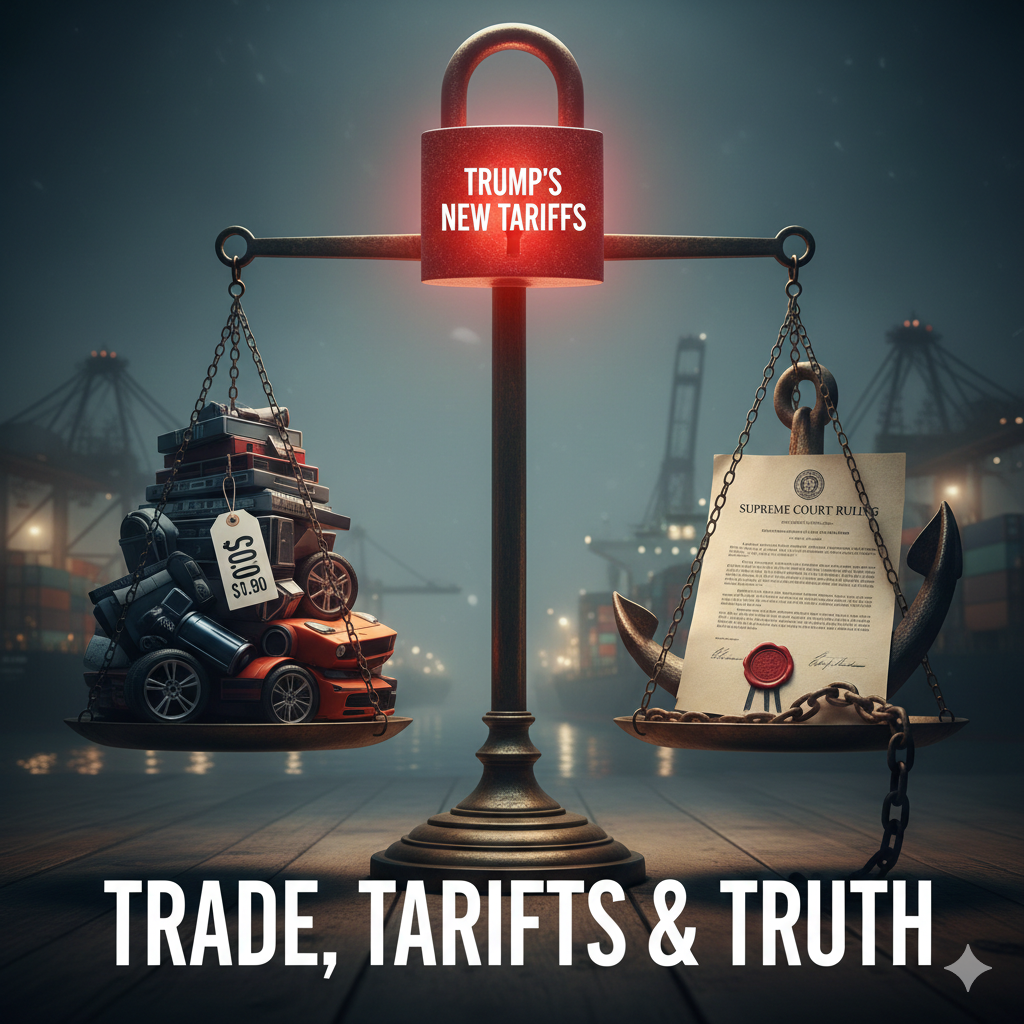

Following a landmark Supreme Court ruling regarding the White House’s authority over trade, a critical question remains: Will consumer prices finally drop? While some expected immediate relief, the reality is far more complex. A combination of new global trade policies and strategic brand positioning suggests that the “cycle of cost uncertainty” is here to stay.
The Legal Tug-of-War
Last week, the Supreme Court moved to curb the executive branch’s power to impose certain tariffs. However, this legal victory for trade advocates has not yet translated into lower costs for the average buyer. The Trump administration has quickly pivoted to new global tariff structures and legal maneuvers, ensuring that the industry remains in a state of flux. For manufacturers and importers, this means that even if one tax is lowered, another may soon take its place.
Why Retailers Aren’t Cutting Prices
Even if tariff relief becomes a reality, experts warn that “sticker prices” on luxury and premium goods are unlikely to fall. Here is why the industry is holding its ground:
- Margin Protection: After years of supply chain disruptions, retailers are prioritizing the recovery of their profit margins.
- Brand Equity: Instead of lowering prices—which can sometimes “devalue” a high-end brand’s image—companies are choosing to reinvest extra capital into marketing and brand building.Cost Absorption: Many brands previously absorbed tariff costs without raising prices; now that tariffs may ease, they are simply “balancing their books.”
What Consumers Should Expect
If you are looking for a bargain, don’t expect permanent price cuts on tags. Instead, market analysts predict that relief will appear in more subtle ways:
- Seasonal Promotions: Rather than changing the base price, stores will likely offer deeper discounts during traditional sales periods (like Black Friday or End-of-Season sales).
- Temporary Incentives: “Limited-time offers” will be used to move inventory without committing to a long-term price reduction.
- Value Bundles: Companies may offer more “value for money” by bundling products rather than slashing the price of a single item.
Future Outlook & Global Impact
The global trade landscape remains unpredictable. As long as the administration continues to use tariffs as a primary tool for negotiation, businesses will remain cautious. For the fashion, tech, and automotive industries, this means keeping prices stable (and high) to protect against future sudden shifts in trade law.
Conclusion
While the Supreme Court has provided a new legal framework for trade power, the economic “ripple effect” is slow to move. For now, the combination of new policy shifts and corporate strategy means that while the cost of doing business might change, the cost of buying is staying exactly where it is.