
Walk through exhibitions, meet the buyers and the first thing anyone usually thinks about when Pakistan’s textile industry is mentioned are the bales of cotton fabric and cotton garment exports. But now, a new term is coming about. Organic Cotton.
Today, consumers and brands alike are demanding sustainable and ethical production practices. Pakistan’s mills and farmers are preparing to bring this valued fabric to the front. This change is not just about the way cotton is grown, it unlocks new value chains that can help Pakistan’s textile sector gain new opportunities in the global market.
This shift is much needed, because traditional cotton processing in Pakistan has begun to face steep challenges. Output has severely dropped because of climate changes, increasing pests and a smaller cotton area. Production was estimated at about 6.85 million bales in the 25-26 season, which is a 34% decrease from official targets. This sudden variation has forced mills to import cotton in order to meet demand and this not only puts pressure on the country’s foreign exchange but also squeezes the industry margins.
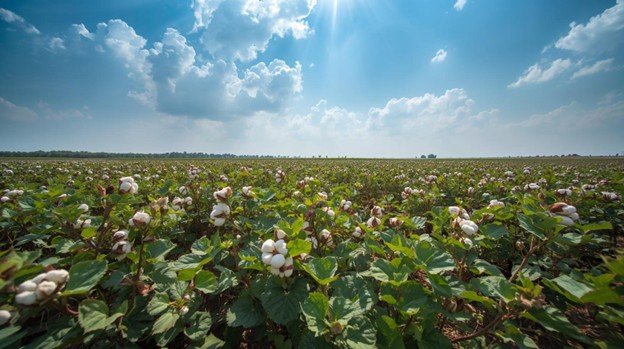
Even though, traditional cotton farming is uncertain these days, it also creates an important opening. Organic cotton, grown without synthetic pesticides or chemical fertilizers is becoming a highly demanded commodity. There is an increasing need for sustainability from global buyers and the final customers are now willing pay higher prices for ethically made goods. According to the Organic Cotton Accelerator (OCA), organic cotton in Pakistan is gaining more traction. In the 25-26 season alone, the initiative shows more than 10,000 farmers cultivating nearly 60,000 hectares and growing around 16,000 metric tonnes of organic lint cotton. This proves that the growth and popularity of organic cotton is shifting and becoming more mainstream in the agricultural sector of Pakistan.
This change is not accidental, as organizations like the OCA have been pushing for it by creating space for the farmers, brands, policymakers and civil society to encourage the production of organic cotton. Participants at a national stakeholders event in Lahore discussed how organic cotton production could be increased by sound policy, financing instruments and market collaboration that can help show demand. The involvement of many different sectors is importantly and essential since it ensures that the production of organic cotton has support from groups like certification bodies, agronomists, traceability systems and buyers who are willing to pay more. Moreover, global certification such as the Global Organic Textile Standard (GOTS) are now usual requirements for many international brands, which ensures that the claims of organic cotton goods by the manufacturers are factual and accurate.
Let’s now, talk about the prices. Organic cotton prices are much higher than regular cotton, almost 20% to 40% higher. This is because of labor intensive farming, lower crop yields and rigorous certification costs. It avoids synthetic chemicals, requiring manual weeding and natural pest control. Additionally, it often involves ethical wages for farmers and higher quality, non toxic processing.
Even though the yeilds of organic cotton farming is much lower than traditional cotton, initiatives in our regions show the scale of it. In early 2025 the OCA expanded to more than a 100,000 farmers across India, Turkey and Pakistan. This proved that sustained engagement could increase production and share of verified harvests that could then be sold for a higher price.
For Pakistan, the opportunity here combines with several compelling structural advantages. The country has been one of the world’s largest cotton producers for a long time, a status that provides a deep knowledge of farming expertise, plus capacity and export infrastructure. Even though conventional cotton output has fluctuated wildly, organic cotton brings a way to differentiate Pakistan from competitors that have not yet built robust sustainable cotton programs. Additionally, many brands in Europe and North America are committing to sourcing sustainably due to climate and social responsibility targets, which means that suppliers that can offer traceable and verified organic cotton can get strategic global advantages.
This change doesn’t come without challenges, and many farmers face a period of in-conversion when switching to organic farming. This means that initial costs increase and yields could decline. OCA data from recent seasons shows that almost all the available organic cotton was bought by participating brands, but only 58% of that had premium pricing. This further emphasizes that there should be strong market support and long term commitments so that those who adopt these methods earlier are rewarded rather than penalized for making this shift.
Pakistan’s organic cotton story is deeply rooted in people as much as it is in economics. For farming communities currently plagued by rising input costs, weather risks and limited access to global markets, organic production offers a path toward real stability. It provides a chance to earn more from the same land and become part of a supply chain that actually values traceability and environmental stewardship. Initiatives that connect smallholders with agronomic training, seeds, and data tools do more than just raise incomes. They build a necessary resilience against the shocks of climate change and crop diseases that our industry faces daily.
The journey from farm to fabric will require continued collaboration, investment and innovation from all stakeholders. Traceability technologies, such as blockchain and digital bale IDs like FiberTrace, are already emerging as essential tools. These give global buyers the confidence they need in origin and certification, helping Pakistan’s organic cotton stand out in increasingly crowded markets. When coupled with supportive public policy and a genuine private sector commitment, organic cotton could evolve from a promising niche into one of Pakistan’s defining textile export stories.
As the world increasingly demands sustainability alongside quality and price, Pakistan’s leap into organic cotton is not just timely, it is necessary. If the country can harness its agricultural strengths, align its value chains, and deliver certification with credibility, the fields of Balochistan, Punjab, and Sindh could soon feed a global appetite for cotton that is as ethical as it is beautiful. And in doing so, Pakistan would offer a model for how traditional sectors can reinvent themselves for a greener and more equitable future.
We are seeing a shift where the value of the crop is no longer just in its weight, but in the transparency of its journey. For us as manufacturers, this means embracing a model where the farmer and the factory are part of the same narrative. If we can prove that our roots are sustainable, we prove that our industry is ready to lead rather than just follow.