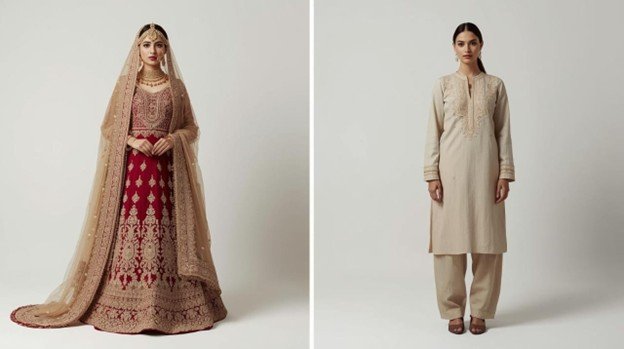

Pakistani fashion has its backbone in bridal and formal design. Our design calendars are shaped with shaadi seasons in mind, creativity is judged by bridal campaigns and we view perfect craftsmanship as that in heavily embellished lehengas and formal wear made for a grand entrance. For some fashion designers, this world is one they’re comfortable with and aspire to reach. However, for most of us, fashion is experienced in a very different way and the industry doesn’t reflect that.
Pakistan’s fashion identity was built around bridal and occasion wear. These outfits have garnered international praise and recognition for the intricate embroidery and cinematic effect. However, this has pushed everyday wear to the backend. These formal clothes are made to be worn only a handful of times and usually we see these beautiful dresses on social media and save them for the later that never comes. Then we go to our everyday clothes, which lack the detail and attention that goes into bridal wear.
I am not saying that everyday minimalist clothing is non-existent in Pakistan. Many brands have now released basic casuals, which seems like a step in the right direction. They seem to come with neutral palettes, effortless dressing and tasteful silhouettes. But look beyond the marketing campaigns and these clothes fail to meet consumer standards. Most women complain of awkward fittings, bad quality of fabrics, sizing issues and impracticality. And what’s more is that they are all priced high with promises of quality but no delivery.
Here, we really feel the disconnect between us and the designers. The minimalism in everyday wear is not just a lack of heavy embroidery and lace, it needs the same attention to detail. The fit, cut and fabric are integral parts of ensuring the outfits are comfortable and functional. More often than not, casual wear feels like a rushed version of formal designs, made only as an afterthought. They usually do not consider the human proportions or comfort which ends up in clothes that look acceptable on the hanger but not on woman’s body.
And as I’ve written before, creating a Pakistan Size Standard could be a true game changer, especially for everyday basics. Most casual wear today is still drafted on imported size charts that don’t reflect Pakistani body ratios, which is why clothes so often feel off despite looking right on a hanger. For women already overwhelmed by constant multimanagement, well cut basics aren’t a luxury, they’re relief.
We already know that designers can create good clothing. We have witnessed the endless trials and tribulations that come with making bridal wear. Multiple trials, refined tailoring and comfort alongside design. In contrast, this precision and care disappears when it comes to casual wear. A basic kurta is not supposed to have alterations at home and linen shouldn’t crease up almost immediately. Women shouldn’t have to choose between looking good and feeling good. When everyday wear fails on the very fundamentals of design, it become frustrating.
In the global market, fashion relies on everyday relevance. In the bigger fashion markets, commercially, everyday wear sells more and ready to wear is better quality and accessible. Occasion wear exists as a bonus and this balance creates adaptable brands and loyal customers who buy regularly. Pakistan’s fashion industry has enough textile expertise and talented designers to achieve this same balance, but we are still stuck on our bridal wear.
Every now and then, we see hints of what’s possible. I must admit that there are some brands and designers, both mainstream and homebased who are creating exceptional, elevated basics. These designers pay attention to the cut, the fabric and the quality of the fit. They are solving real problems and they ensure that their customers keep coming back. These pieces don’t just look good on camera, they look good in real life and they can be worn over and over again without getting worn out.
Progressing beyond bridal and occasion wear opens up a world of opportunity. This opportunity enhances creativity, economically and culturally. This doesn’t mean abandoning the traditional methods, it means incorporating traditional techniques for a different set of clothes. It means treating a lehenga the same as a basic kurta, by testing fabrics on real bodies and ensuring quality and consistency.
We, especially the women in Pakistan are not asking for less beauty, we are asking for better relevance. We want clothes that feel comfortable and worth their price. Clothes that don’t spark complaint threads in online communities. The future of Pakistani fashion will not be built only on moments of celebration, but on the everyday lives in between them. And when the industry chooses to design for mass market, it will create a far more loyal customer base waiting, quite literally, to be dressed properly at last.