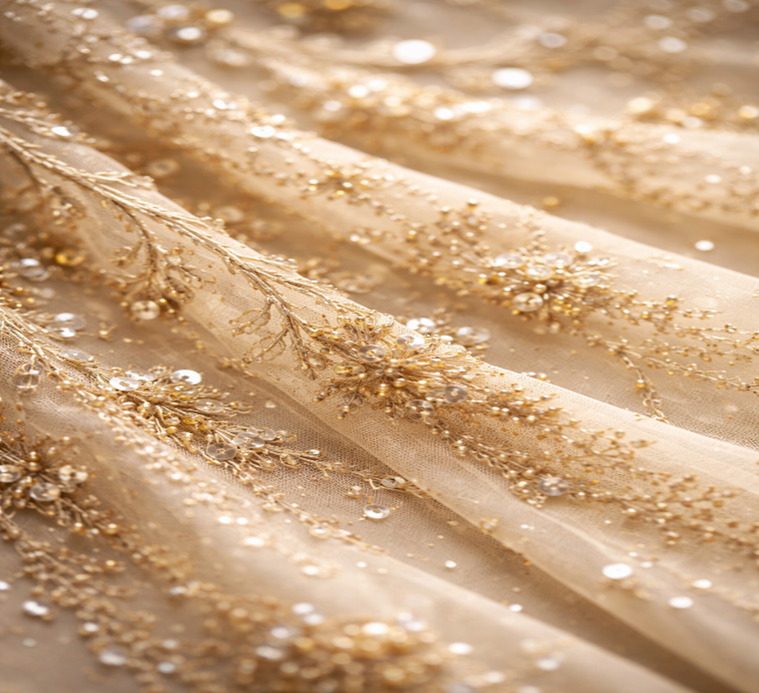

Kamdaani is more than just embroidery—it is a literal capture of light within a thread. If you have ever seen fabric shimmer softly under a lamp—not with the harshness of sequins or the grit of glitter, but with a delicate, soulful glow—you have witnessed the magic of Kamdaani. It is one of Pakistan’s most poetic crafts, where fine metallic thread is laid onto fabric so lightly that the cloth appears to be wearing jewelry.
A Royal Lineage: From Mughal Courts to Modern Ramps
The history of Kamdaani stretches back to the royal wardrobes of the subcontinent. It flourished during the Mughal era, a time when craft was treated not merely as labor, but as a pillar of culture. Back then, a piece of Kamdaani was an asset—something commissioned with patience, cherished for a lifetime, and passed down through generations.
The name itself is deeply symbolic, derived from “Kam” (work) and “Daani” (container/holder). It is a craft that literally “holds” the labor of the artisan within its metallic stitches.
The Anatomy of the Craft
Traditionally, Kamdaani is performed on fine, breathable bases such as chiffon, organza, and cotton-silk blends. These delicate fabrics allow the metallic thread to “float” rather than sink into the weave.
- The Technique: Artisans use Badla (thin metallic strips) or Zari to create intricate patterns.
- The Aesthetic: Unlike heavier Zardozi, the magic of Kamdaani lies in its restraint. It is meant to elevate the fabric, not overpower it.
- The Hands Behind the Light: This skill isn’t taught in schools; it is inherited. In small workshops tucked away in the bazaars of Punjab and Sindh, men and women spend hours bent over frames, mastering the tension required to make cold metal look like soft silk.
The Modern Transformation
In the last decade, Pakistan’s luxury fashion houses have taken Kamdaani out of the “bridal box” and onto the global stage. It has become more wearable and visible to a younger, more modern generation.
Mainstream Visibility: Brands like Sana Safinaz, Elan, and Maria B have integrated these metallic details into festive collections, making them a staple for modern formals
Design Innovators: Designers like Hussain Rehar use it for bold, dramatic silhouettes, while Faiza Saqlain uses it as the soul of her romantic signatures. Sania Maskatiya expertly blends this heritage technique into contemporary compositions, turning ancient embroidery into modern texture.
Sustainability and the Artisan Crisis
In 2026, as the global fashion industry shifts toward “Slow Fashion,” Kamdaani stands as Pakistan’s competitive advantage. Every hand-laid stitch is a rejection of machine-made uniformity. However, the craft faces a critical challenge:
Undervalued Labor: The market loves the look but often ignores the grueling hours required.The Middleman Issue: Artisans often work for low wages while the final luxury product fetches high prices.
The Generational Gap: As younger generations seek quicker income, fewer are willing to spend years mastering this slow, meticulous skill.
A Vision for Cultural Capital
Kamdaani is not just fashion; it is our cultural capital. As global consumers crave authenticity and traceable craftsmanship, Pakistan has the opportunity to lead. Imagine a garment sold in London or New York with a tag that explains the lineage of the Kamdaani artisan—moving beyond “Made in Pakistan” to “Artisanally Crafted in Pakistan.”
Conclusion
The next time you see that silvery glow on a dupatta, remember that you are looking at more than embroidery. You are looking at a spark of our history, stitched into fabric one tiny light at a time. Kamdaani is the proof that Pakistan does not just produce textiles—it produces artistry.