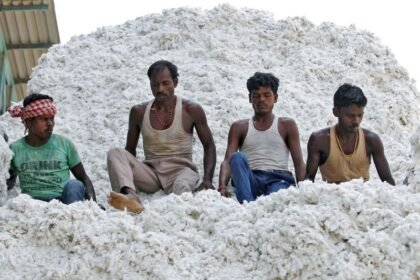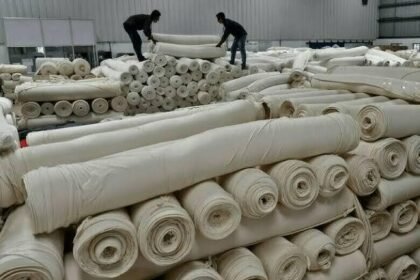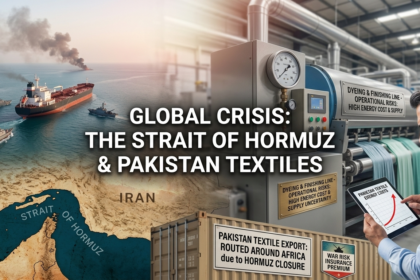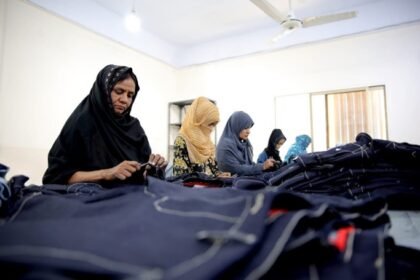
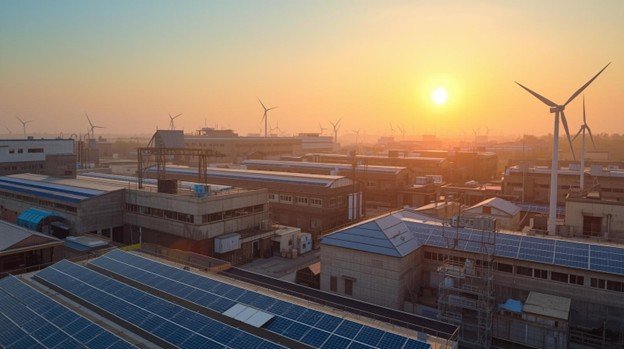

Being a part of Pakistan’s textile industry, I regularly interact with owners and directors of several local textile mills. Someway or the other, small talk leads to discussions about energy crisis and for me, a partner in an SME garment manufacturing unit, I feel that our woes, especially in relation to utility costs / energy costs are the same. We’re not just discussing another line item on a financial statement, we are confronting one of the most intense operational challenges of the decade. For years, this industry that accounts for roughly 60 percent of the country’s total exports and employs millions has been squeezed by unpredictable power cuts, soaring grid tariffs and reliance on expensive backup generators that not only inflate production costs but squeeze margins to an extent that there is no profitability left. And so, like any other crisis in this country, the industry has found an alternative in the form of a steady embrace of solar and other renewable energy solutions that are cutting bills, boosting productivity and trimming carbon footprints across the entire industry, from spinning and weaving to final garment manufacturing.
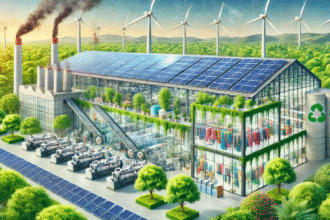
This story of accidental sustainability in energy is not hypothetical, it’s unfolding in real time. Kohinoor Mills Limited recently commissioned additional solar capacity that brings its total renewable power generation to 7.2 megawatts, enough to supply more than 20 percent of its operational electricity needs from clean sun generated power. That move alone slices a significant portion off the company’s energy bill, shields it from abrupt grid tariff hikes and reduces exposure to imported fuel volatility. And more expansion is on the way, with plans to install another 3 MW before the end of the current fiscal year.
Kohinoor’s initiative is part of a broader industrial pivot. Din Textile Mills has boosted its own solar footprint by 3.2 MW, raising its operational renewable energy to over 11 MW, as listed on the Pakistan Stock Exchange. Saif Textile Mills, another publicly traded yarn producer, has signed on to install a 10 MW solar energy system designed specifically to bring down energy costs and bolster profitability in an environment where electricity often costs more than double what solar generation can deliver.
Artistic Denim Mills Limited, a leader in denim fabrics, commissioned a 2.32 MW solar plant this past year and is already installing an additional 2.57 MW project to deepen its energy independence and support everything from spinning and weaving to garment finishing with renewable power. Even our own small factory now runs 70% on solar energy with plans to bring this number up to 90% by the end of 2026. Such investments are actually, strategic responses to a reality where industrial energy tariffs can reach levels that erode export competitiveness. In many cases, solar energy in Pakistan’s industrial application now costs about Rs. 18 per kilowatt-hour compared with an upward of Rs. 40 per kilowatt-hour from the conventional grid, a dramatic difference that directly impacts unit economics. Our own unit’s grid electricity in an industrial area in Karachi costs over Rs. 100 per kilowatt-hour!
Let’s look at the bigger picture here and the context behind this transformation. Pakistan’s overall solar generation has surged, with solar’s share of total electricity production tripling to around 14 percent by 2025, and rural areas achieving even higher penetration as solar panels fill gaps left by an unstable grid. This rise has positioned the country ahead of some regional peers in solar adoption as industries and households alike seek stable, low cost power sources.
But the narrative extends beyond solar. Premium Textile Mills Limited, recognizing that resilience requires diversification, has taken renewable commitments a step further with a $4.15 million investment in a 7.5 MW wind turbine, complementing its 20 MW of existing solar capacity. When operational, that wind project is expected to generate roughly 55 gigawatt-hours of clean electricity annually, enough to slash an estimated 30,000 metric tons of carbon emissions per year and cover about 67 percent of the firm’s energy needs through renewable sources.
This is a profound shift for a sector long defined by energy vulnerability. Textile manufacturing is inherently energy intensive. Spinning, weaving, dyeing and finishing operations run round the clock and any disruption or tariff shock directly affects productivity and profitability. Historically, mills coped with unreliable grid supplies by turning to diesel generators, a costly and high carbon fallback that could push energy costs even higher. Today’s solar and wind installations bring predictability and resilience, allowing operations to run with far less dependence on erratic utilities or backup fuel.
The benefits of these transitions extend beyond immediate cost savings. Global buyers, particularly in Europe and North America, are increasingly demanding sustainability credentials from their suppliers. Renewable energy adoption strengthens Pakistan’s value proposition in export markets by aligning textile producers with international environmental benchmarks. At the same time, reduced carbon emissions and lower fuel imports contribute to national sustainability goals and ease pressure on the country’s foreign exchange reserves.
But, like all good things, the industry turning to renewable energy comes with its own set of challenges. Financing large scale solar and wind projects, integrating energy storage for night time needs and aligning policy incentives with industrial realities are complex undertakings. Yet the momentum within Pakistan’s textile sector is unmistakable. More mills are exploring rooftop solar arrays and hybrid solutions that blend grid power with renewables and each megawatt installed represents both a hedge against volatility and a step toward carbon aware manufacturing.
In a landscape where every rupee saved on energy flows straight to the bottom line, solar and renewables are not just about the environment, they are about survival, competitiveness and future proofing an industry that remains the backbone of Pakistan’s economy. The sun that once beat down on cotton fields is now powering the very factories that turn those fibers into global products, reshaping an age old industry into one that is more resilient, more sustainable and better positioned for the decades ahead.