
Last week, I found myself in a deep brainstorming session with Maimona Sarfaraz, the force behind Farm Fabric Fashion. In the middle of our conversation about the future of this industry that we so love, she asked me a single question that stopped me cold. A question so simple, yet so overlooked, it left me both silent and heartbroken.
Why doesn’t Pakistan have its own standard size?
As someone who has been in this industry for the past 1.5 decades, I know that with our history, where we were mere manufacturers for foreign brands designing in London, New York or Milan, we in Pakistan always followed their tech-packs and their size measures. Back when we didn’t have many ready-to-wear labels of our own, we honestly didn’t even need a Pakistan Standard Size. But as our fashion industry surged with local brands, DTC labels and e-commerce, we’re beginning to feel that our sizes don’t truly reflect our bodies.
I have worked with several local brands over the years. Amazing brands with exceptional design sense, great clothes and beautifully crafted pieces. Yet, after that conversation with Maimona, something clicked. I finally saw the pattern I had been witnessing for years without truly naming it.
Most of our homegrown brands are still leaning on size charts borrowed from Western bodies. Their first few collections often become experimental rounds of testing the market, collecting feedback, adjusting measurements and adjusting again.
But this constant tweaking comes at a cost. Inconsistent fits, confusing size labels, frustrated customers and an unnecessary spike in returns. Problems that shouldn’t exist in a market as vibrant and fashion forward as ours.
There’s solid academic work showing this disconnect. A doctoral thesis published in 2023 found that Pakistani womenswear brands often base their size charts on international data, not local measurements and as a result, struggle with fitting issues around critical areas like bust, shoulders, hips and armholes.
Similarly, in menswear, a master’s thesis from UMT (University of Management and Technology) observed that there is no size system in Pakistan and sizing decisions are frequently made on perceptions rather than research.
Research on girth measurement among Pakistani women also highlights a gap. Standard sizing guidelines from international bodies often don’t align with local body proportions.
These issues don’t just reduce comfort, they hurt trust in local brands.
So what is the cost of having no local standard? For one, consumers get frustrated. When Large means different dimensions across brands, customers are spiraled into complaining. Then there’s operational inefficiency. Without a consistent local size system, pattern makers and manufacturers are forced into reactive grading, often based on guesswork or trial and error. We also face sustainability drains. Returns, remakes and discarded inventory aren’t good for the business or the planet.
The good news? PSQCA (Pakistan Standards & Quality Control Authority) manages many technical textile standards and researchers and doctoral students have produced anthropometric studies and proposals for Pakistani sizing systems. A recent PhD study collected anthropometric data (body measurements) of Pakistani women aged 20 to 30 and proposed size charts that better reflect local body shapes.
There’s similar research for men. UMT’s sizing thesis offers a foundational analysis of menswear body dimensions in Pakistan.
Even for children, studies in Karachi have shown that socioeconomic factors such as malnutrition, can significantly impact body size, highlighting that a one-size-fits-all import chart just won’t do
But we need more than just studies. We need action. And here’s how the industry, brands, manufacturers and policymakers, can turn this insight into action.
- Partner with universities, fashion schools and textile associations to measure bodies across age, gender, region and socioeconomic status.
- Come together as industry stakeholders (manufacturers, brands, regulators) to draft a standardized size system.
- Use models like Europe’s EN 13402 standard, which labels sizes based on body dimensions, as a reference.
- Run pilot programs with local fashion labels to test new size charts.
- Collect feedback, especially around fit, returns and customer satisfaction.
- Launch a national Know Your Size campaign to teach customers to measure themselves properly.
- Encourage brands to show both body measurement based size labels and garment measurement labels for greater transparency.
- Update the standard every few years based on fresh data, since body shapes and demographics evolve.
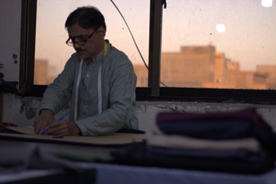
And you know what our biggest goldmine is? Our tailor culture! This one thing is Pakistan’s greatest, most overlooked advantage, something Western countries don’t have. For generations, Pakistani women and men have routinely gotten their clothes custom-stitched by these neighborhood tailors. They are not just service providers, they are keepers of the richest, most diverse, most accurate body measurement data in the country.
An area tailor in Lahore knows how those measurements differ from someone in Karachi. A tailor in Multan understands the distinct proportions of women in South Punjab. A tailor in Mardan knows how waist and hip ratios change with age and lifestyle.
Because tailors exist in every area, every town, every city and every village, Pakistan has something rare. A nationwide, decentralized human database of perfect, real life measurements.
If integrated properly, this grassroots network could become the backbone of a national sizing standard, offering local and region specific insights no digital scanner can match.
If Pakistan establishes a robust, local sizing standard, the impact could ripple across South Asia. We could actually pioneer a South Asia size standard that resonates with Bangladesh, India, Sri Lanka and beyond. Brands exporting to the South Asian diaspora the world over could confidently market their clothes as tailored for South Asian body types, a powerful differentiator. And what’s more, we can really go beyond and recognize diversity in shape, not just size, making fashion more accessible for plus-size, petite or tall consumers.
Pakistan’s garment sector has long been the backbone of global fashion supply chains. But as our own brands mature and our consumers demand better fit, we are outgrowing the legacy of importing foreign size charts. Building a genuine Pakistan size standard isn’t just a technical fix, it’s unavoidable. We must remember that our brands now make for us, design for us and we need clothes that are made to fit our bodies.
If we get this right, it won’t just change the way we manufacture, it could transform the way we wear, sell and think about fashion in Pakistan and in South Asia as a whole.